
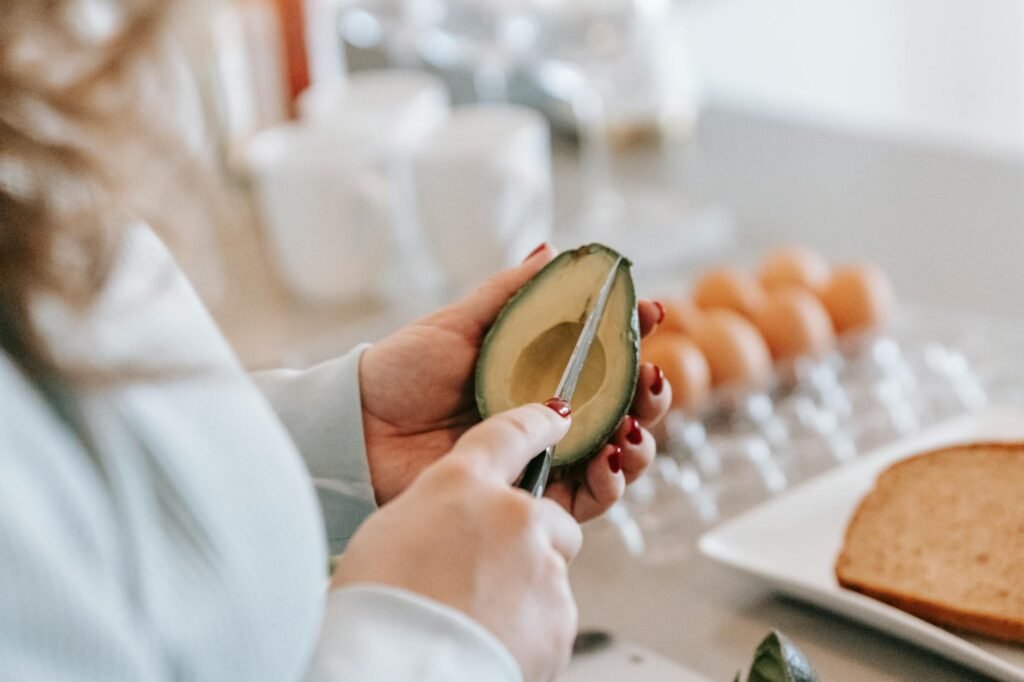
A daily avocado habit sounds simple, but the real question is not whether avocado is a “good” food. It is whether eating it every day actually improves your diet, appetite, and grocery routine without quietly adding more calories than you meant to eat. That matters because a USDA serving page lists one avocado at 201 grams with 322 calories, 29 grams of fat, and 14 grams of fiber. In other words, avocado is nutrient-dense, but it is not a free food. (snaped.fns.usda.gov)
TL;DR
- Eating avocado every day can raise your fiber intake and shift your fat intake toward unsaturated fat, which is generally a healthier direction when it replaces foods higher in saturated fat. (snaped.fns.usda.gov)
- The biggest benefit usually comes when avocado replaces something else, such as mayo, butter, cheese, or a creamy dip, instead of being added on top of an already heavy meal. (heart.org)
- For many adults, a practical everyday portion is about one-quarter to one-half of an avocado, not automatically the whole fruit. That is an editorial portion rule based on avocado’s calorie density and the wide size range sold in stores. (snaped.fns.usda.gov)
- Daily avocado is not ideal for everyone. People with chronic kidney disease, latex-related food reactions, or new digestive symptoms may need a different plan. (niddk.nih.gov)
This article is for general information, not medical advice. If you have chronic kidney disease, food-allergy symptoms, or a medically prescribed eating plan, check with a clinician or registered dietitian before making avocado an everyday habit. (niddk.nih.gov)
What daily avocado can do well
Avocado earns its reputation mostly because it combines fiber with mostly unsaturated fat in one food. The USDA page above lists 14 grams of fiber in one 201-gram avocado, and the FDA Daily Value for fiber on Nutrition Facts labels is 28 grams. That means one large avocado can deliver about half a day’s fiber target by itself, though many people will do better with a smaller portion. Federal potassium tables also list avocado at 182 milligrams of potassium per quarter cup. (snaped.fns.usda.gov)
In practical terms, that can mean steadier fullness and a better nutrient mix in meals that are otherwise too refined. Short-term randomized studies have found that avocado-containing meals can improve satiety, and an older human feeding study found that adding avocado or avocado oil to salad and salsa increased absorption of carotenoids from those foods. That does not make avocado magic. It means avocado can help a good meal work a little better. (pubmed.ncbi.nlm.nih.gov)
There is also some controlled-trial evidence for cholesterol benefits in the right setting. In one randomized feeding trial in adults with overweight or obesity, a moderate-fat, cholesterol-lowering diet that included one avocado per day lowered LDL-C, non-HDL-C, and small dense LDL more than comparison diets. But that result came within a structured heart-healthy diet, not from sprinkling avocado onto an otherwise unchanged eating pattern. (pubmed.ncbi.nlm.nih.gov)
The AVO Fit Score: a fast test before you make it daily
Here is a simple tool you can use right away. AVO stands for Amount, Value, and Offset. The point is to stop thinking about avocado as a health-halo food and start judging it the way a careful editor or budget-minded shopper would: how much you eat, what you get from it, and what it replaces. That framing matches what the research keeps showing. Avocado seems most useful when it improves diet quality or displaces less-helpful foods, not when it is just one more calorie add-on. (pubmed.ncbi.nlm.nih.gov)
| Factor | 0 points | 1 point | 2 points |
|---|---|---|---|
| Amount | You usually eat a whole avocado without planning the rest of the meal. | Your portion changes day to day, and you are not sure how much you need. | You usually keep it to about one-quarter to one-half, or use a whole avocado only when the rest of the meal is lighter. |
| Value | It does not keep you full, and you often waste part of it. | It helps a little, but not enough to justify the cost or calories every day. | It clearly improves fullness, taste, or meal quality enough that you finish it and do not over-snack later. |
| Offset | It is mostly an extra topping. | Sometimes it replaces something, sometimes it does not. | It regularly replaces mayo, butter, cheese, creamy dressing, or a more processed snack. |
How to read your score – 5 or 6 means this habit of eating an avocado on a daily basis is probably suitable for you. 4 or 3 means it may be more suitable for you 3-5 times per week; likely smaller portions will work better. 2 or 0 means that this habit is likely to cost you more in terms of calorie content or money relative to what you gain in terms of nutrition and satisfaction.
Smart portions that make sense in real meals
Because avocado sizes vary so much at the store, “one avocado” is a weak portion rule. A USDA-sized avocado can be 322 calories, so half of one similar fruit is roughly 160 calories and 7 grams of fiber. That is why one-quarter to one-half is a more realistic everyday portion for many people, especially if the meal already contains eggs, cheese, nuts, oil, or chips. (snaped.fns.usda.gov)
| Meal situation | Try this portion | Why it works |
|---|---|---|
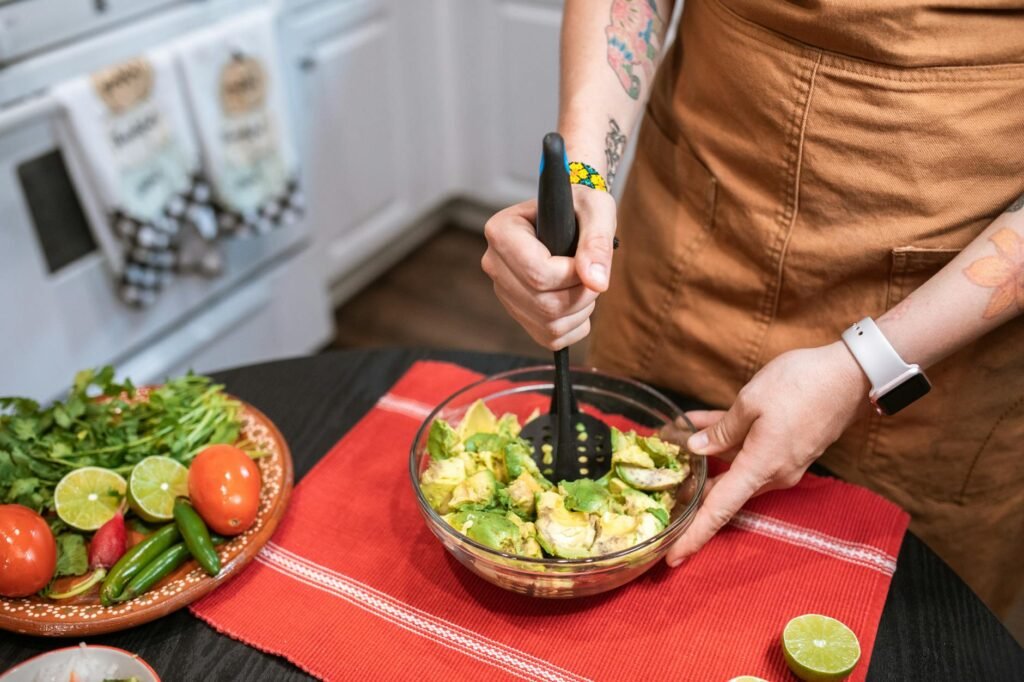
| Toast, sandwich, or eggs | About 1/4 to 1/2 avocado | Usually enough to add creaminess and fiber without turning breakfast into an accidental calorie bomb. |
| Salad or grain bowl that already has nuts, cheese, or dressing | About 1/4 avocado | You already have another fat source, so a smaller amount often does the job. |
| Lunch where avocado replaces mayo or part of the cheese | About 1/2 avocado | This is one of the cleanest swaps because the avocado is doing real replacement work. |
| Light meal built around vegetables and lean protein | Up to 1 avocado can fit | A larger portion can make sense when it is the main fat source and the rest of the plate is lighter. |
| Guacamole with chips or restaurant Mexican food | Start small and reassess after a few bites | The issue is usually the total meal, not the avocado by itself. |
A realistic household example
Say your usual lunch is about 400 calories. If you start adding half a large avocado every day, you are adding roughly 160 calories. Over seven days, that is about 1,120 extra calories from avocado alone. If nothing else changes, that may be enough to slow fat loss or nudge your intake higher than you realized. But if that same half avocado replaces mayo, some cheese, or a bag of chips, the math and the nutrition picture look very different. (snaped.fns.usda.gov)
Now add the budget angle. If avocados cost $1.25 each at your store, a daily habit costs about $37.50 per month. If two or three go bad because you bought them all ripe at once, the habit gets more expensive fast. That does not mean avocado is not worth buying. It means a daily food habit should earn its place twice: once in nutrition and once in real household use.
What avocado cannot fix on its own
The strongest reality check comes from the largest everyday-avocado trial. In the Habitual Diet and Avocado Trial, adding one large avocado per day for six months modestly improved overall diet quality, and a gut-microbiota substudy found higher alpha diversity, but the main trial found no overall effect on visceral adiposity, body weight, or most cardiometabolic risk factors. That is a useful reminder: avocado can be part of a better pattern, but it is not a shortcut around the rest of your diet. (pubmed.ncbi.nlm.nih.gov)
A smaller 12-week weight-loss trial reached a similar practical takeaway. When avocado was included inside a calorie-reduced plan, participants lost weight, but the avocado group did not clearly outperform the control group on weight loss. In plain English, avocado can fit into weight loss, but it does not create weight loss by itself. (pubmed.ncbi.nlm.nih.gov)
When daily avocado is the wrong move, and what to do instead
- If you have chronic kidney disease or lab-confirmed high potassium, daily avocado may not fit your plan. NIDDK advises that CKD can require limits on high-potassium foods, and the National Kidney Foundation specifically says avocado portions may need adjustment based on labs and stage of disease. (niddk.nih.gov)
- If avocado makes your mouth itch or you have hives, stomach pain, or stronger allergy-type symptoms, do not treat that as normal. MedlinePlus notes that some people with latex allergy also react to foods including avocado. (medlineplus.gov)
- If you suddenly push your fiber intake up, you may get gas, bloating, cramps, or diarrhea. MedlinePlus advises adding fiber gradually, and NIDDK notes that some people get more gas with too much fiber or more bloating with high-fat foods. (medlineplus.gov)
- If the habit creates waste, scale back the frequency before you give up on the food. Three or four times per week is still plenty if that matches how you actually shop and eat.
If daily avocado is not working, the backup plan is not “go back to buttered toast and hope.” It is to keep the nutrition goal and swap the vehicle. For unsaturated fats, the American Heart Association points to nuts, seeds, and liquid nontropical plant oils. For fiber, CDC guidance highlights fruits, vegetables, whole grains, and legumes such as beans, lentils, and peas. (heart.org)
Common mistakes that make a healthy habit less healthy
- Treating avocado as a free food because it is nutritious.
- Eating a whole avocado by default even when the meal already has other concentrated fats.
- Counting restaurant guacamole, chips, sour cream, and cheese as if the avocado is the only thing in the meal.
- Adding avocado daily without asking what it is replacing.
- Ignoring signs that the habit does not suit your body, your budget, or your schedule.
How to pressure-test the advice instead of guessing
- For two weeks, log the portion you eat, the meal it goes into, and what it replaced.
- Also log your hunger three hours later. If avocado is helping, you should notice better staying power, not just a prettier plate.
- If weight management is a goal, compare your weekly average weight and your total meal pattern, not a single day.
- If you have CKD, digestive disease, or allergy symptoms, review the change with a clinician or registered dietitian. (niddk.nih.gov)
- When you buy packaged avocado products, read the Nutrition Facts label and ingredient list. Avocado-flavored products do not automatically offer the same nutrition profile as plain avocado. (fda.gov)
To show whether or not avocado is beneficial to you in terms of improving satisfaction from your habits, how well you maintain a balanced diet, and how nutritious your food choices are with avocado against your established eating patterns, can only be assessed on your own personal criteria.
Bottom line
If you eat avocado every day, the most likely benefits are better fiber intake, more unsaturated fat, and meals that feel more satisfying. The most common downside is simple: too much of a good food, eaten as an add-on instead of a swap. For most people, the sweet spot is a deliberate quarter to half avocado in meals where it replaces something heavier, not a reflex whole avocado every day. (snaped.fns.usda.gov)
FAQ
Is a whole avocado every day too much?
Not automatically, but it can be more than many people need. A USDA-size avocado can be 322 calories, so a whole fruit every day works best when the rest of the meal is lighter and the avocado is replacing another concentrated fat source. (snaped.fns.usda.gov)
Can eating avocado every day help lower cholesterol?
It may help in the right context. Controlled feeding research found benefit when one avocado a day was part of a cholesterol-lowering diet, but that is different from adding avocado to an otherwise unchanged routine. (pubmed.ncbi.nlm.nih.gov)
Will daily avocado help me lose weight?
It can fit into a weight-loss plan, but it is not a guaranteed weight-loss food. The largest six-month trial did not find overall weight or visceral-fat reduction from adding one avocado per day to a habitual diet. (ars.usda.gov)
Why does avocado feel more filling than some other toppings?
Part of the answer is its mix of fiber and fat. Short-term randomized trials found avocado-containing meals improved satiety compared with higher-carbohydrate alternatives. (pubmed.ncbi.nlm.nih.gov)
Who should be careful about eating avocado every day?
People with chronic kidney disease or high potassium labs, people who get allergy-type symptoms after avocado, and people whose digestion worsens when they increase fiber or high-fat foods too quickly should be more careful. (niddk.nih.gov)
References
- USDA SNAP-Ed: Avocados nutrition page – https://snaped.fns.usda.gov/resources/nutrition-education-materials/seasonal-produce-guide/avocados
- FDA: Daily Value on Nutrition and Supplement Facts labels – https://www.fda.gov/food/nutrition-facts-label/daily-value-nutrition-and-supplement-facts-labels?apid=37930398&rvid=53bf11102c60035374476a84f6a52bdaada05ad855475c9a438ce18e95f04b96
- American Heart Association: Fats in foods – https://www.heart.org/en/healthy-living/healthy-eating/eat-smart/fats/monounsaturated-fats
- Dietary Guidelines for Americans: Food sources of potassium – https://www.dietaryguidelines.gov/food-sources-potassium
- PubMed: Avocado and post-ingestive satiety trial – https://pubmed.ncbi.nlm.nih.gov/24279738/
- PubMed: Carotenoid absorption from salad and salsa with avocado or avocado oil – https://pubmed.ncbi.nlm.nih.gov/15735074/
- PubMed: Moderate-fat diet with and without avocados randomized trial – https://pubmed.ncbi.nlm.nih.gov/25567051/
- USDA ARS: Effect of incorporating 1 avocado per day versus habitual diet on visceral adiposity – https://www.ars.usda.gov/research/publications/publication/?seqNo115=398199
- PubMed: One avocado per day improves diet quality exploratory results – https://pubmed.ncbi.nlm.nih.gov/38375072/
- PubMed: Daily avocado consumption and gut microbiota ancillary study – https://pubmed.ncbi.nlm.nih.gov/39641169/
- NIDDK: Healthy eating for adults with chronic kidney disease – https://www.niddk.nih.gov/health-information/kidney-disease/chronic-kidney-disease-ckd/eating-nutrition
- National Kidney Foundation: Avocados and kidney disease – https://www.kidney.org/kidney-topics/avocados