Avocado has a health halo, which is exactly why portion problems can slip by unnoticed. The more useful question is not whether avocado is good for you. It is. The real question is when a nutritious food becomes too much for your body, your calorie target, or even your grocery budget. That can happen faster than many people expect because avocado is rich, easy to layer onto other calorie-dense foods, and usually served by feel instead of by measure. (dietaryguidelines.gov)
This article is general nutrition information, not medical advice. If you have chronic kidney disease, take medicines that can raise potassium, or get ongoing bloating, pain, diarrhea, or constipation after eating avocado, ask a clinician or registered dietitian for individualized advice. Potassium limits and GI triggers are not one-size-fits-all. (medlineplus.gov)
TL;DR
- Yes, you can overdo avocado. For most healthy adults, the usual problem is not danger. It is oversized portions, hidden calories, or digestive discomfort. (ods.od.nih.gov)
- A practical starting portion for many meals is 1/4 to 1/2 cup of avocado flesh, especially if avocado is not the only concentrated fat in the meal. (dietaryguidelines.gov)
- Common red flags include repeated bloating, calorie creep from unmeasured portions, and adding avocado on top of cheese, nuts, dressing, or chips instead of using it in place of another fat. (niddk.nih.gov)
- If you have kidney disease or have been told to watch potassium, the answer changes. Get personalized guidance before assuming a generic portion is fine. (medlineplus.gov)
Yes, you can eat too much avocado
Avocado earns its reputation. Dietary Guidelines resources list it as a nutrient-dense source of fiber and potassium, and USDA research describes avocado as rich in monounsaturated fats. But nutritious does not mean unlimited. Current federal nutrient tables put avocado at about 60 calories, 2.5 grams of fiber, and 182 milligrams of potassium per 1/4 cup, and about 120 calories and 364 milligrams of potassium per 1/2 cup. (ars.usda.gov)
That is why avocado can quietly move from helpful to heavy. If you spread a thick layer on toast, add it to a salad with nuts and cheese, and then have guacamole at dinner, you are not doing anything wrong. But you may be overshooting the amount that helps you feel good or fits your day. The FDA also notes that serving size on a label reflects what people typically eat, not what they should eat. (fda.gov)
For otherwise healthy people with normal kidney function, NIH says abnormally high or low blood potassium is rare. In everyday life, the more common issue is simple overportioning or digestive discomfort. But if you have chronic kidney disease or impaired potassium excretion, high-potassium foods can be a very different conversation. (ods.od.nih.gov)
Use the A.V.O. Portion Audit
Use the AVO Portion Audit – Amount, Vehicle, and Outcome to be practical. Use this as a useful scorecard for one question: Is the avocado helping this meal, or just making it richer than it needs to be? Assign a score in each of those three categories ranging from 0-2.
| Factor | 0 points | 1 point | 2 points |
|---|---|---|---|
| Amount | 1/4 to 1/2 cup or less | More than 1/2 cup | Close to a whole large avocado, or avocado shows up in multiple meals most days |
| Vehicle | Avocado replaces another rich fat or stands mostly on its own | Avocado is added to one other rich fat, such as cheese or dressing | Avocado is stacked with several rich fats, such as nuts, cheese, oil, mayo, or chips |
| Outcome | You feel satisfied and symptom-free | The meal feels heavy or hunger returns quickly | You get repeated bloating, gas, or obvious calorie creep |
Score 0 to 2 and your portion is probably reasonable. Score 3 to 4 and it is worth trimming back to 1/4 to 1/2 cup for a week. Score 5 to 6 and the portion is probably too large for your current goal, tolerance, or meal structure. If symptoms keep showing up even at smaller amounts, do not assume the problem is only quantity. (dietaryguidelines.gov)
Signs your portions are probably too big
- You feel bloated or gassy after avocado-heavy meals. NIDDK notes that some people get more gas when they eat too much fiber or high-fat foods, and avocado-rich meals can be both. (niddk.nih.gov)
- You are adding avocado on top of other rich ingredients instead of using it as the main fat. In real meals, portion trouble often comes from stacking avocado with oil, cheese, nuts, mayo, or chips, not from avocado alone. (dietaryguidelines.gov)
- You are trying to manage body weight, but your avocado portions are unmeasured. The difference between 1/4 cup and 1/2 cup is about 60 calories; over a week, that is about 420 calories if it happens daily. (dietaryguidelines.gov)
- Avocado crowds out something your meal needs more, such as protein, another fruit or vegetable, or a lower-cost staple that would make the meal more balanced.
- You have been told to watch potassium because of kidney disease or certain medicines. For that group, “healthy food” is not specific enough guidance. (medlineplus.gov)
What a more practical portion looks like
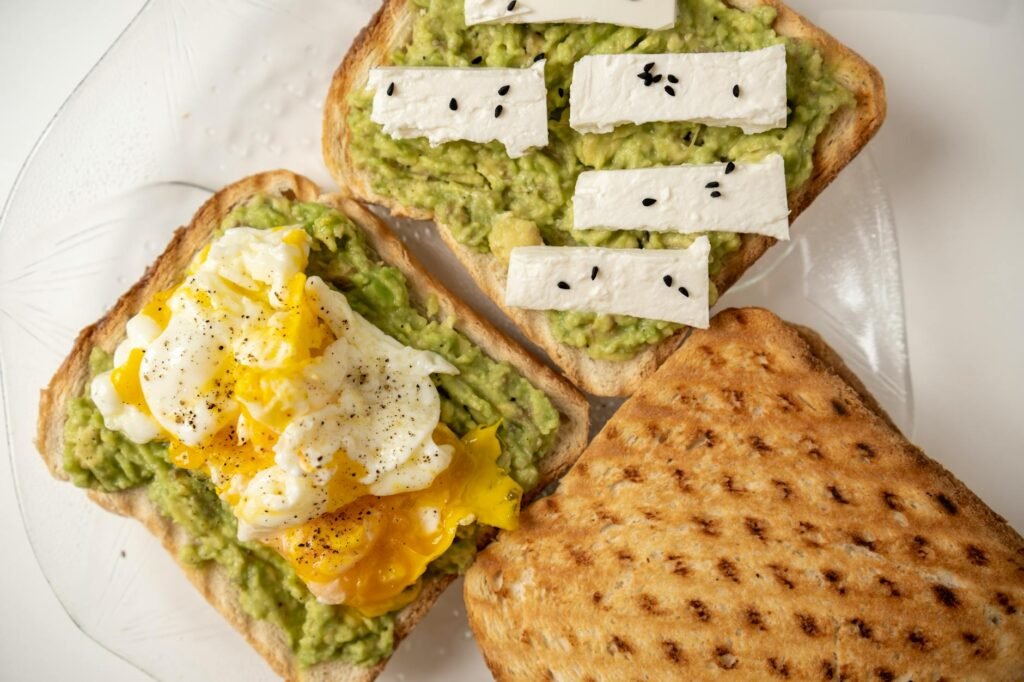
A reasonable starting portion for many adults is 1/4 to 1/2 cup of avocado flesh, especially if avocado is not the only concentrated fat in the meal. That is not a federal rule. It is a practical inference from the Dietary Guidelines nutrient tables, combined with the FDA reminder that serving sizes are not recommendations. Start closer to 1/4 cup if the meal already includes another rich fat. Move toward 1/2 cup when avocado is the main creamy or fatty element. (dietaryguidelines.gov)
| Situation | Better avocado amount | Why it usually works |
|---|---|---|
| Eggs or toast with no other rich topping | 1/4 to 1/2 cup | Enough creaminess and staying power without making breakfast too dense |
| Salad or grain bowl that already has cheese, nuts, or dressing | 1/4 cup | The meal already has plenty of concentrated fat |
| Guacamole with chips or a restaurant meal | 2 to 4 tablespoons of guac to start | Dips and shared plates make portion creep easy |
| You are tracking bloating or IBS-type symptoms | 1/4 cup or less during testing | Smaller amounts make patterns easier to spot |
| Potassium-restricted diet or CKD | Use your clinician’s limit | Medical guidance overrides general advice |
A realistic household example
Say a two-adult household does avocado toast four mornings a week. If each person uses 1/2 cup, that adds about 240 avocado calories per breakfast before bread, eggs, or oil. If they cut to 1/4 cup each and add sliced tomato or an extra egg for staying power, the meal still feels substantial and the household trims about 120 calories per breakfast, or roughly 480 calories over four breakfasts. (dietaryguidelines.gov)
There is a money angle too. If avocados at your store run $1.50 each, using smaller measured portions can mean getting two purposeful servings out of a fruit instead of one oversized smear that disappears into the toast. That does not make avocado too expensive or bad. It just means the same food often works better when you treat it like a rich ingredient, not a free food. This price example is illustrative; your local cost will vary.
A one-week avocado reset
- Measure avocado for seven days instead of eyeballing it. Use 1/4 cup or 1/2 cup, not half of a generous avocado. The FDA notes that portion information is easiest to use when you know the actual amount you are eating. (fda.gov)
- Choose one meal a day for avocado instead of letting it show up automatically at breakfast, lunch, and dinner.
- If the meal already has cheese, nuts, dressing, mayo, or chips, keep avocado at the smaller end of the range.
- If you want more volume, add tomato, cucumber, beans, citrus, or extra greens before adding more avocado.
- Write down symptoms, fullness, and energy for two to three hours after the meal. NIDDK specifically recommends a food and symptom diary when gas is the issue. (niddk.nih.gov)
Common mistakes that make avocado portions drift upward
- Counting avocado as healthy and therefore not worth measuring.
- Using restaurant guacamole or social-media avocado toast as your normal baseline.
- Adding avocado instead of swapping it for another fat.
- Forgetting that guacamole, avocado slices, and avocado oil can all show up in the same day.
- Blaming avocado when the real trigger may be onion, garlic, dairy, carbonation, or the total fat load of the meal. NIDDK notes that gas symptoms can come from multiple carbohydrates and meal patterns, not only one food. (niddk.nih.gov)
When cutting back is not enough
If you reduce avocado to 1/4 cup and still get symptoms, stop treating this as a simple portion problem. You may be reacting to the rest of the meal, eating too fast, swallowing extra air, or dealing with a condition such as IBS or lactose intolerance. NIDDK says some people may need a symptom-guided diet plan, and low-FODMAP or other therapeutic approaches should be done with professional guidance. (niddk.nih.gov)
- Test plain avocado by itself or with a simple meal, rather than spicy guacamole with onions and chips.
- Look at timing. A large late-night meal with avocado, alcohol, and fried food is a different test than avocado at lunch.
- If your clinician has mentioned CKD, high potassium, ACE inhibitors, ARBs, or potassium-sparing diuretics, get personalized advice before assuming a generic portion is safe. (medlineplus.gov)
- Persistent abdominal pain, vomiting, diarrhea, weight loss, or symptoms that are getting worse deserve medical evaluation, not more portion tinkering. (niddk.nih.gov)
How to pressure-test the advice
The cleanest way to verify whether avocado is the issue is a short, boring experiment. Keep everything else about breakfast or lunch as similar as possible for one week. Measure the avocado, note the amount, and track whether symptoms or hunger change. This works better than making three changes at once. FDA guidance on serving sizes and NIDDK guidance on food-symptom diaries support this kind of check. (fda.gov)
- Days 1 and 2: use 1/4 cup.
- Days 3 and 4: if you felt fine, try 1/2 cup.
- Days 5 and 6: keep the avocado steady, but remove one other rich add-on so you can see whether stacking fats is the bigger issue.
- Day 7: review the pattern. If symptoms clearly rise with bigger portions, you found your limit. If nothing changes, avocado may be innocent.
Bottom line
Yes, you can eat too much avocado. For most healthy adults, the first signs are not dramatic. They are routine: heavier meals, hidden calorie creep, and repeated bloating when portions get large or are stacked onto other rich foods. A measured 1/4 to 1/2 cup is a sensible starting zone for many meals, while people with kidney disease or potassium restrictions need individualized advice. If a smaller portion still does not sit well, look beyond avocado and troubleshoot the whole meal. (dietaryguidelines.gov)
FAQ
Is one whole avocado automatically too much?
Not automatically. It depends on the avocado’s size, the rest of the meal, and your goals. But a whole avocado is often more than the 1/2-cup nutrient portion used in Dietary Guidelines tables, so it makes sense to pause and ask whether you are using avocado as the meal’s main fat or just piling it onto other rich foods. (dietaryguidelines.gov)
Can avocado make you bloated even though it is a healthy food?
Yes. NIDDK says some people get more gas symptoms when they eat too much fiber or high-fat foods, and avocado-heavy meals can fit that pattern. If bloating keeps happening even after you reduce the amount, test the rest of the meal too. (niddk.nih.gov)
What portion should I start with if I am trying to lose weight?
A good starting point is 1/4 cup when the meal already contains another concentrated fat, and up to 1/2 cup when avocado is the main fat in the meal. That range is about 60 to 120 calories based on current Dietary Guidelines food tables. (dietaryguidelines.gov)
Does guacamole count the same as plain avocado?
The avocado still counts nutritionally, but the eating experience can be different because guacamole may come with onion, garlic, salt, chips, or a larger serving size than you would eat plain. If guacamole bothers you, test plain avocado alone at a smaller measured amount. (niddk.nih.gov)
Who should be more careful with avocado portions?
People with chronic kidney disease, anyone told to limit potassium, and people taking medicines that can affect potassium balance should be more cautious. MedlinePlus specifically notes kidney problems, ACE inhibitors, ARBs, and potassium-sparing diuretics as situations that can matter. (medlineplus.gov)
How do I tell the difference between too much avocado and a different food trigger?
Run a short food-and-symptom test. Keep the meal simple, measure the avocado, and change only one variable at a time for about a week. NIDDK recommends food-and-symptom diaries for gas problems, and FDA guidance helps you measure portions more accurately. (niddk.nih.gov)
References
- Dietary Guidelines for Americans: Food Sources of Potassium – https://www.dietaryguidelines.gov/food-sources-potassium
- Dietary Guidelines for Americans: Food Sources of Dietary Fiber – https://www.dietaryguidelines.gov/resources/2020-2025-dietary-guidelines-online-materials/food-sources-select-nutrients/food-0
- FDA: Serving Size on the Nutrition Facts Label – https://www.fda.gov/food/new-nutrition-facts-label/serving-size-new-nutrition-facts-label
- FDA: What’s on the Nutrition Facts Label – https://www.fda.gov/food/nutrition-facts-label/whats-nutrition-facts-label
- MedlinePlus: Potassium in Diet – https://medlineplus.gov/ency/article/002413.htm
- NIH Office of Dietary Supplements: Potassium Fact Sheet for Health Professionals – https://ods.od.nih.gov/factsheets/potassium-healthprofessional/
- NIDDK: Eating, Diet, & Nutrition for Gas in the Digestive Tract – https://www.niddk.nih.gov/health-information/digestive-diseases/gas-digestive-tract/eating-diet-nutrition
- NIDDK: Eating, Diet, & Nutrition for Constipation – https://www.niddk.nih.gov/health-information/digestive-diseases/constipation/eating-diet-nutrition
- USDA ARS publication on avocado intake and nutrient contribution – https://www.ars.usda.gov/research/publications/publication/?seqNo115=430457