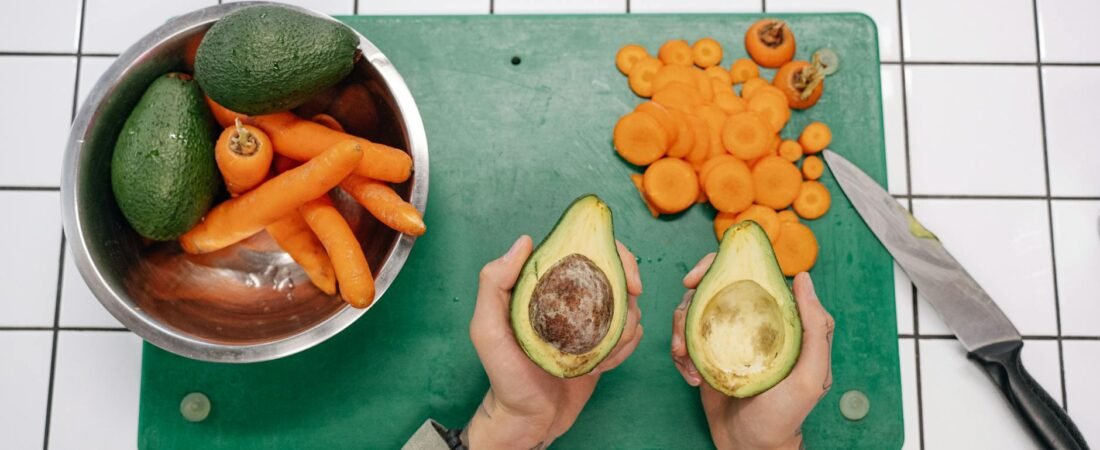
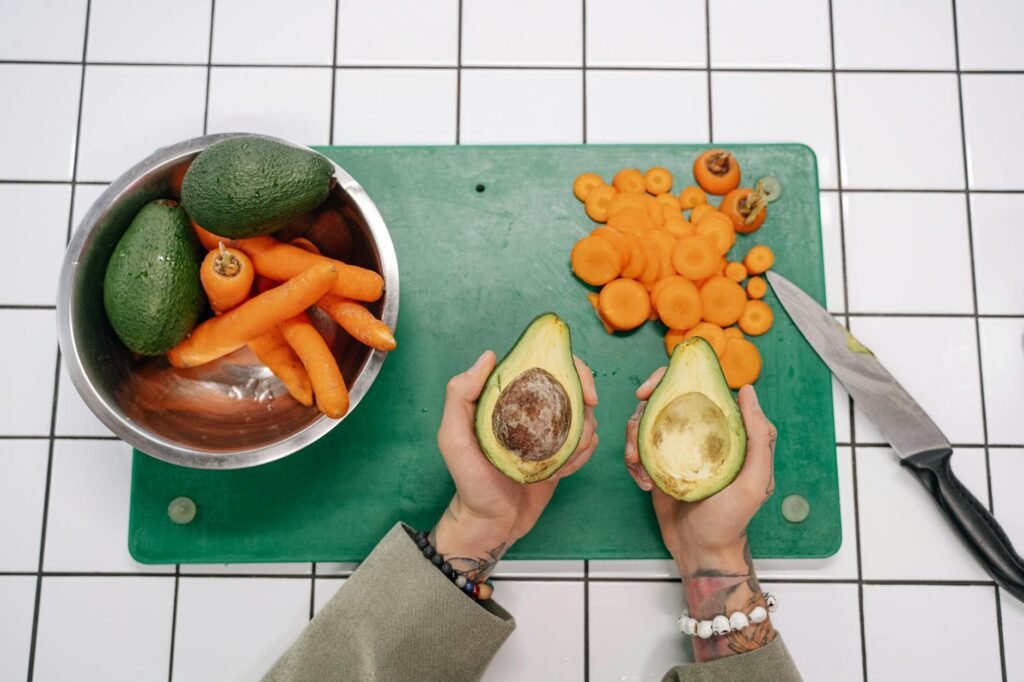
Avocado has a strange reputation in weight-loss culture. It gets talked about like a free food when it is anything but. USDA data put avocado at about 160 calories per 100 grams of edible portion, with 6.7 grams of fiber and a fat profile that is mostly unsaturated rather than saturated. That is a strong nutritional package, but it is still a calorie-dense one. And in a large six-month randomized trial of adults with elevated waist circumference, adding one avocado a day to the usual diet did not reduce visceral fat or body weight overall. The most useful way to think about avocado is not as a miracle food or a fattening food. It is a tool that can help when it replaces something else and backfires when it simply lands on top of an already full diet. (ars.usda.gov)
- Best use: avocado measured in grams and used as a swap for another fat or extra snack calories, not added to an already heavy meal. CDC weight guidance still comes back to calorie balance and substitution. (cdc.gov)
- Default portion: 50 grams is a strong starting point. FDA uses 50 grams as the reference amount for avocado, and USDA-based math puts that at about 80 calories, 3.35 grams of fiber, and 7.33 grams of fat. (hhs.gov)
- Why it can help: in a randomized lunch study, adding about half an avocado increased satisfaction and lowered the desire to eat for several hours. (nutritionj.biomedcentral.com)
- Why it can backfire: that same study did not show significantly lower calories at the later dinner and snack, and the large HAT trial found no overall reduction in belly fat or body weight from simply adding one avocado per day to a usual diet. (nutritionj.biomedcentral.com)
- What to do: if you want avocado to support weight loss, portion it, pair it with protein, and make it replace calories instead of riding on top of them. (cdc.gov)
Why avocado helps in some meals and hurts in others
The case for avocado is real. Fiber, unsaturated fat, and a creamy texture can make a meal feel slower, richer, and more satisfying than the same meal built around dry toast or a thin salad. USDA nutrient data also show that avocado provides potassium, folate, and vitamin E along with that fat. The problem is that many people treat those benefits as permission to stop measuring it. That is where the math flips. A useful food can still be easy to overeat when the portion is vague. (ars.usda.gov)
The strongest practical satiety evidence comes from a randomized crossover lunch study in adults with overweight. Compared with a control lunch, the avocado-added meal increased satisfaction by 23% and lowered desire to eat by 28% over five hours. That sounds impressive, and for people who raid the pantry mid-afternoon, it matters. But the study also included an important caution: the avocado meal carried an extra 112 calories, and later dinner and evening snack intake did not differ significantly. In plain English, avocado may help you feel better between meals, but it does not automatically erase calories later. (nutritionj.biomedcentral.com)
Longer trials tell the same balanced story. In a 12-week randomized study, adults on a calorie-reduced diet lost weight whether the plan included one daily avocado or not, which suggests avocado can fit a weight-loss diet. But in the much larger HAT trial, giving people one avocado per day for six months without otherwise overhauling the diet did not reduce visceral adiposity or body weight overall. That is why avocado is best treated as a structure tool inside a calorie-controlled eating pattern, not as a shortcut. (sciencedirect.com)
Use the Earn-Its-Calories Avo-Swap Scorecard
Here is a quick way to decide whether avocado is helping your plan or just making it feel healthier. Give yourself one point for each statement that is true. Scores of 4 to 5 usually mean avocado is working for you. A score of 2 to 3 is neutral. A score of 0 to 1 usually means it is backfiring. The framework is built around the evidence on calorie balance, portion size, substitution, and short-term satiety. (cdc.gov)
- Swap: The avocado is replacing mayo, butter, creamy dressing, cheese, or a mindless snack later.
- Measure: You know the portion in grams, or you deliberately used a measured range such as 30 to 50 grams or 50 to 75 grams.
- Protein anchor: The meal also includes a clear protein source, such as eggs, Greek yogurt, cottage cheese, chicken, tuna, tofu, edamame, or beans.
- Hunger timing: You are using avocado in the meal that usually leaves you hunting for food two to four hours later.
- Waste plan: You already know what happens to the rest of the avocado, so you are not forcing yourself to eat the whole thing just because it is ripe.
The previous statement is very significant than most individuals acknowledge. A large part of people overindulging in avocado is not due to dissatisfaction with their actual food consumption but rather (usually) because they are feeling bad for having bought so many avocados. Once again, if you identify this trend, then you can simply reduce your avocado consumption (by purchasing fewer avocados, purchasing smaller-sized avocados, or reserving them until the next day when the remainder of your avocado will be prepared), so that the food itself satisfies both (a) the number of calories consumed and (b) the amount of money spent on the food.
How much avocado to use if weight loss is the goal
For most adults trying to lose weight, 50 grams is the best default starting portion. FDA uses 50 grams as the reference amount for avocado, and USDA-based math puts that at about 80 calories. If you want a lighter touch, 30 grams is about 48 calories. If avocado is the only major fat source in a meal, 75 grams lands around 120 calories and can still make sense. The key is to think in grams, not in fractions of an avocado, because avocado size varies a lot. A half can be modest or enormous. (hhs.gov)
| Meal setup | Smart amount | Why it can help | Backfire signal |
|---|---|---|---|
| Egg toast or a turkey sandwich | 30 to 50 g | Adds creaminess and staying power if it replaces butter, mayo, or some cheese | You also keep the butter, mayo, and cheese |
| Salad or grain bowl with chicken, tofu, tuna, or beans | 50 to 75 g | Works well when avocado is the main fat and the meal already has protein and volume | You also add fried toppings and creamy dressing |
| Tacos or burrito bowl | 50 to 75 g | Reasonable if it replaces sour cream or queso | It sits on top of rice, cheese, chips, and guac |
| Smoothie | 0 to 30 g | Only useful if it is replacing another rich ingredient | It joins nut butter, seeds, coconut milk, and sweetened add-ins |
| Restaurant guacamole | Small measured portion | Can fit if it replaces a richer appetizer or part of the entree fat load | It becomes chips before dinner and then you still order the full heavy meal |
A realistic example with numbers
Say Dana wants avocado at work lunches every weekday. Version A is 50 grams on a chicken salad five days a week. That is about 400 avocado calories for the workweek. Version B is 100 grams on the salad plus another 50 grams later in a so-called healthy guac snack. Now avocado alone contributes about 1,200 calories over those same five days. Same food, very different calorie impact. On the budget side, if avocados cost $1.50 each and one spoils every week, that is about $6 a month in preventable produce waste. The point is not to fear avocado. It is to stop letting a healthy halo hide the total. (ars.usda.gov)
Common mistakes that turn avocado into a diet trap
- Treating avocado like salad greens. It is nutrient-dense, but it is not a low-calorie freebie. (ars.usda.gov)
- Using it as an addition when it should have been a swap. CDC’s basic weight-loss principle is still to create a calorie deficit, often by substituting foods rather than stacking them. (cdc.gov)
- Eyeballing a portion. A small smear on toast and half of a jumbo avocado are not remotely the same thing. FDA’s reference amount is 50 grams for a reason. (hhs.gov)
- Ordering restaurant guacamole with chips and then still eating a full calorie-dense entree. The avocado is not the only issue. The whole setup is.
- Blending avocado into smoothies that already contain calorie-dense ingredients. Liquid meals make portion creep easier to miss.
- Eating the whole ripe avocado because you do not want it to go brown. That is a storage problem, not a hunger cue.
When the first plan is not enough
If you are measuring avocado and your weight trend is still flat after two or three weeks, do not force the food to stay in the plan just because it is healthy. The larger HAT trial is a useful reality check: simply adding one avocado per day to usual eating did not lower visceral fat or body weight overall. Your backup options are straightforward. Cut the portion to 30 grams. Use avocado only every other day. Save it for the meal that triggers the worst snacking. Or swap to lower-calorie, higher-volume foods such as tomatoes, cucumbers, crunchy slaw, salsa, or beans more often. The right answer is the version you can repeat while staying in a calorie deficit. (ars.usda.gov)
A 7-day avocado reset
If your current avocado habit feels fuzzy, run this one-week reset. It is deliberately simple, and it follows the CDC idea of tracking what you eat before making bigger changes. (cdc.gov)
- For seven days, weigh every avocado portion before it hits the plate.
- Default to 50 grams unless avocado is clearly replacing another fat source in the meal.
- Use avocado only in meals that also contain a protein anchor.
- Do not use avocado twice in the same day during the reset.
- Skip restaurant guacamole and smoothie add-ins for the week so the numbers stay clean.
- Rate your hunger two to three hours after the meal on a 1 to 10 scale.
- At the end of the week, look at your average avocado grams, your hunger notes, and your scale trend before deciding whether to keep, cut, or move the portion.
How to verify whether avocado is actually helping
For the next 14 days, track only four things: avocado grams, what the avocado replaced, hunger two to three hours later, and your seven-day average weight trend. That is enough to pressure-test the advice without turning your life into a spreadsheet. If avocado lowers snacking and your calories stay controlled, keep it. If hunger is unchanged and calories drift up, shrink the portion. If you only enjoy avocado when it shows up with chips, takeout, or oversized brunches, pause it for now. Tracking food intake is one of CDC’s basic practical tools for weight loss, and it works especially well here because avocado is easy to quantify. (cdc.gov)
- Keep the habit if a 30- to 50-gram portion consistently helps you avoid random snacks later.
- Reduce the portion if you only notice fullness when the serving climbs into whole-avocado territory.
- Move the timing if avocado is more useful at lunch than at breakfast or dinner.
- Drop it for now if the habit mostly costs money, creates waste, or rides along with high-calorie restaurant meals.
The bottom line
Avocado can help with weight loss when it makes a meal more satisfying and replaces other calories. It backfires when it is treated like a free add-on, eaten in vague portions, or bundled into already heavy meals. For most people, 50 grams is the smartest starting point. If that portion helps control snacking, great. If not, avocado is not mandatory. The best weight-loss foods are the ones that fit your calories, your routine, and your grocery budget at the same time. (hhs.gov)
FAQ
Can avocado reduce belly fat on its own?
Probably not. In the large HAT randomized trial, adding one avocado per day to a habitual diet for six months did not significantly reduce visceral adipose tissue or body weight overall. Avocado can still fit a weight-loss diet, but it does not appear to melt belly fat by itself. (ars.usda.gov)
Is half an avocado too much for weight loss?
Sometimes yes, sometimes no. The problem is that avocado sizes vary so much that half is not a reliable portion. FDA uses 50 grams as the reference amount for avocado, and USDA-based math puts that at about 80 calories. Weighing the portion is far more useful than guessing by fractions. (hhs.gov)
Can I eat avocado every day and still lose weight?
Yes, if it fits your calories. In a 12-week trial, people on a hypocaloric diet lost weight with or without daily avocado, which shows avocado can work inside a calorie-reduced plan. The caution is that simply adding one avocado per day to your existing diet has not been shown to reduce body weight overall. (sciencedirect.com)
Is guacamole better than plain avocado for weight loss?
Not automatically. If the guacamole is mostly avocado, onion, tomato, cilantro, and lime, the avocado itself is not the issue. The bigger question is portion size and what comes with it. Guacamole with a measured portion at a meal is very different from bottomless chips before dinner. (hhs.gov)
What is the best meal to use avocado in?
Usually the meal that leads to the most snacking later, especially if avocado replaces another fat source there. The strongest short-term satiety evidence comes from lunch, where avocado improved satisfaction and reduced the desire to eat for several hours in one randomized study. (nutritionj.biomedcentral.com)
References
- USDA National Nutrient Database, avocado nutrient data (SR Legacy PDF) – https://www.ars.usda.gov/ARSUserFiles/80400525/Data/SR27/reports/sr27fg09.pdf
- FDA Raw Fruits Poster, accessible text version – https://www.fda.gov/food/nutrition-food-labeling-and-critical-foods/raw-fruits-poster-text-version-accessible-version
- FDA guidance on Reference Amounts Customarily Consumed – https://www.hhs.gov/guidance/sites/default/files/hhs-guidance-documents/FDA/Guidance-for-Industry-Reference-Amounts-Customarily-Consumed-%28PDF%29.pdf
- Nutrition Journal randomized avocado satiety study – https://link.springer.com/article/10.1186/1475-2891-12-155
- Current Developments in Nutrition 12-week avocado weight-loss trial – https://www.sciencedirect.com/science/article/pii/S247529912213043X
- USDA ARS summary of the Habitual Diet and Avocado Trial – https://www.ars.usda.gov/research/publications/publication/?seqNo115=398199
- CDC Steps for Losing Weight – https://www.cdc.gov/healthy-weight-growth/losing-weight/index.html
- CDC Healthy Habits: Fruits and Vegetables to Manage Weight – https://www.cdc.gov/healthy-weight-growth/healthy-eating/fruits-vegetables.html